


Emotional Numbing and Resilience of War Veterans: The Role of Military Social Work in Recovery and Reintegration
1. Introduction
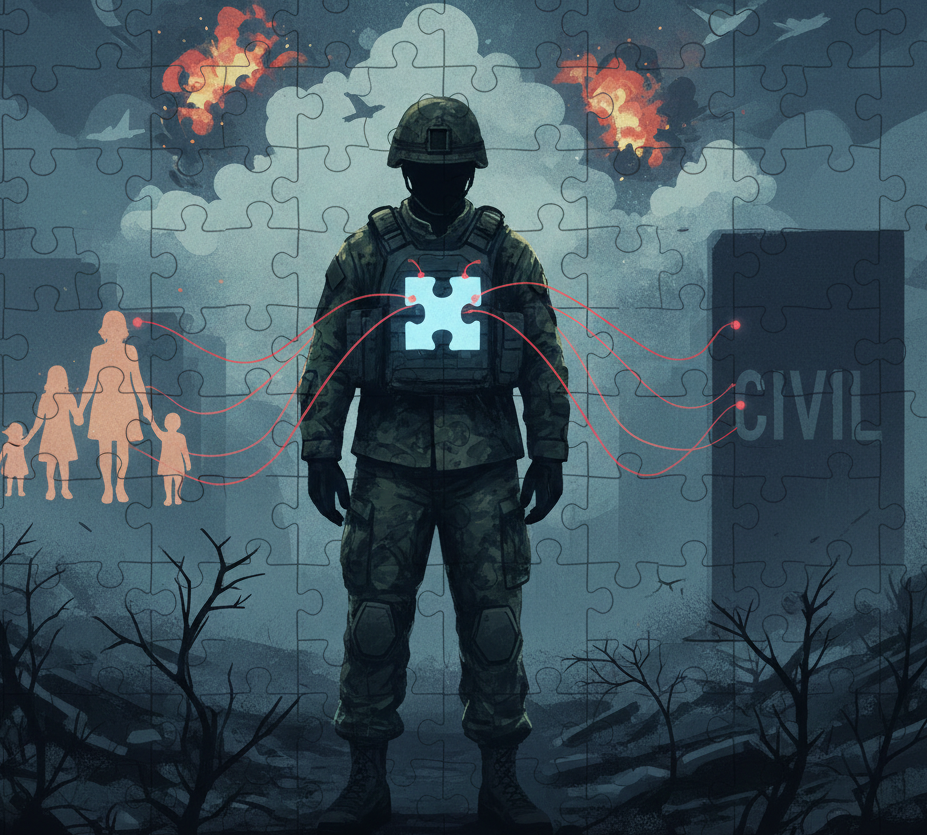
For many war veterans, coming home does not always mark the end of confronting the effects of their experiences. Although the dangers and tensions of conflict zones are left behind, the memories and emotional impact of those experiences often continue to influence daily life. Many veterans describe a state that is difficult to define: emotions seem muted, and the ability to feel joy or sadness no longer has the same intensity as before. Instead of ordinary emotional reactions, there is sometimes a feeling of inner emptiness or a detachment from one’s own inner life.
This reaction is frequently described as emotional numbing and often occurs among individuals who have been exposed to intense traumatic experiences. In the military environment, repeated contact with dangerous situations, the loss of comrades, or exposure to violence can trigger psychological protection mechanisms. During missions, emotional detachment may function as an adaptive strategy that allows soldiers to carry out their duties under extreme conditions. However, after returning to civilian life, this emotional distancing can hinder relationships with family and the process of social readjustment.
In the specialist literature, these manifestations are frequently associated with post-traumatic stress disorder (PTSD), a psychological condition that can arise following exposure to traumatic events. Researchers such as Bessel van der Kolk and Judith Herman emphasize that trauma does not only affect the memory of a difficult event, but also the way in which individuals perceive their emotions, relationships, and personal safety. From this perspective, understanding the psychological reactions of veterans becomes essential both from a psychological and social standpoint.
This paper analyzes the phenomenon of emotional numbing among war veterans, highlighting the impact of traumatic experiences on emotional and social life, as well as the role of support interventions and military social work in the recovery and reintegration process.
2. PTSD in War Veterans
To understand the psychological reactions of veterans, it is important to distinguish between stress and trauma — two concepts that, although sometimes used as synonyms in everyday language, describe distinct experiences.
According to Fischer and Riedesser (1998), stress represents the organism’s reaction to a demanding situation or external pressure. In such contexts, the person mobilizes personal resources to cope with difficulties. In many cases, the effort to adapt contributes to overcoming the situation and restoring equilibrium.
Psychological trauma, however, occurs in situations where the perceived danger exceeds the individual’s capacity to manage it. In such moments, the person may feel that they have lost control of the situation and that personal resources are insufficient to cope with the event. The traumatic experience is often accompanied by intense fear, helplessness, or a sense of vulnerability.
Psychiatrist Judith Herman (1992) emphasizes that trauma can profoundly affect the perception of personal safety and relationships with others. She highlights that traumatic experiences do not only influence the memory of the event, but can also alter the way in which the individual organizes their emotional and social life.
War experiences represent a relevant example of such traumatic situations and are frequently associated with post-traumatic stress disorder (PTSD). This disorder arises as a reaction to events involving serious threats to life or physical integrity, such as armed conflicts, human losses, or repeated exposure to violent situations.
Among the characteristic symptoms of PTSD are:
- re-experiencing the traumatic event through nightmares or intrusive memories;
- avoidance of situations or places that may reactivate traumatic memories;
- a constant state of alertness or hypervigilance, manifested through irritability or sleep difficulties.
Another frequently encountered symptom is emotional numbing. Affected individuals may have the impression that their emotional reactions are diminished or distant. Emotions such as joy, sadness, or affection are perceived with reduced intensity, and relationships with others may become more difficult.
Research conducted on veterans involved in the recent conflicts in Iraq and Afghanistan indicates that a significant proportion of them experience symptoms associated with PTSD after returning from deployment (Hoge et al., 2004). These difficulties can influence adjustment to civilian life and may affect family and social relationships.
In the context of military operations, emotional detachment may initially function as a protective mechanism that allows the soldier to act effectively under extreme stress. Nevertheless, after the conclusion of missions, this same reaction can become a barrier in the social reintegration process.
The factors that influence the onset of PTSD are variable. Beyond direct exposure to traumatic events, the individual’s prior experiences, personal stress management strategies, and the level of social support available after returning from deployment all play a role.
3. Resilience — A Resource-Oriented Perspective
Although post-traumatic stress disorder can have a major impact on the lives of veterans, recent research has also highlighted their capacity to adapt and rebuild psychological and social equilibrium. This capacity is referred to as resilience.
Resilience is often defined as the ability of a person to cope with the demands of the environment without undergoing significant changes to personality structure that would negatively affect the processes of development, adaptation, and socialization.
This perspective places emphasis on the individual’s internal resources and on the ability to regain emotional balance even under conditions of severe stress or following traumatic experiences.
In the field of military social work, the resilience-based approach has led to the development of interventions that are not limited to managing PTSD symptoms, but also seek to strengthen the personal and social capacities of veterans. Thus, the recovery process becomes an active and integrative one, in which both the difficulties and the adaptive and growth potential of each individual are valued.
4. The War Veteran: Traumas, Emotions and Reflections
The experience of war and its impact on the emotional lives of military personnel are frequently reflected in literature and film as well. These representations contribute to an understanding of the human dimension of war traumas.
In the novel The Things They Carried, author Tim O’Brien (1990) describes how soldiers carry not only military equipment, but also the emotional burden of experiences lived during conflict. The stories highlight feelings such as fear, guilt, and loss, which continue to influence the lives of the characters even after the war has ended.
Similarly, films such as The Hurt Locker and American Sniper portray the adjustment difficulties of soldiers returning from conflict zones. The main characters frequently face feelings of alienation, constant tension, or difficulties in family relationships.
These examples highlight the fact that resilience does not presuppose the absence of suffering, but rather the capacity to find ways of adapting in the face of difficult experiences. In this process, social support and specialized interventions can play an important role.
5. The Role of Social Work in Supporting Military Personnel and Families
Military social work plays an important role in supporting military personnel and their families throughout the various stages of a military career. Among the activities carried out by social workers are:
- facilitating the transition from military to civilian life;
- counselling and professional guidance;
- providing support to families during deployment periods;
- participation in debriefing programs following difficult missions;
- development of prevention programs and resilience promotion;
- representing the interests of military personnel in their relationship with institutions and authorities.
Through these interventions, the aim is not only to support the individual, but also to maintain family and social equilibrium.
6. The Context of Romanian Military Personnel in International Missions
The aspects discussed in the specialist literature are also relevant to Romanian military personnel who have participated in international operations over recent decades. Following Romania’s accession to the North Atlantic Treaty Organization in 2004, the Romanian armed forces have been involved in various missions carried out in conflict zones, including Afghanistan and Iraq.
Participation in such missions entails confronting complex and sometimes dangerous situations, which can generate high levels of stress or have a significant psychological impact. For this reason, the reintegration of military personnel after returning from theatres of operations represents an important process both for them and for their families.
In this context, psychological support programs, counselling, and social work services play an essential role in facilitating readjustment to civilian life and in managing the difficulties that may arise following experiences in international missions (Oprina, 2025–2026).
7. Conclusions
Experiences lived during armed conflicts can profoundly influence the emotional, social, and family lives of veterans. Post-traumatic stress disorder (PTSD) and associated symptoms, such as emotional numbing, can affect the way in which veterans adapt to civilian life and their relationships with those close to them.
At the same time, research highlights the fact that many veterans possess important adaptive resources. The concept of resilience underlines the capacity of individuals to cope with traumatic experiences and to gradually rebuild psychological and social equilibrium.
In this process, the role of military social work is essential. Through integrated interventions — including counselling, family support, and recovery programs — specialists can contribute to facilitating the reintegration of veterans into society.
Supporting military personnel who have gone through war experiences does not only mean treating the traumas of the past, but also creating the necessary conditions for them to rebuild their emotional balance, social relationships, and sense of belonging to the community.
References
Bucur, V. M. (2025–2026). Military social work [Teaching material, Master’s programme in Military Social Work, Year I, Semester I]. West University of Timișoara.
Fischer, G., & Riedesser, P. (1998). Lehrbuch der Psychotraumatologie. Ernst Reinhardt Verlag.
Herman, J. (1992). Trauma and recovery. Basic Books.
Hoge, C. W., Castro, C. A., Messer, S. C., McGurk, D., Cotting, D. I., & Koffman, R. L. (2004). Combat duty in Iraq and Afghanistan, mental health problems, and barriers to care. New England Journal of Medicine, 351(1), 13–22.
O’Brien, T. (1990). The things they carried. Houghton Mifflin.
Oprina, C. (2025–2026). Legal foundations and social policies in the military field [Course support, Master’s programme in Military Social Work, Year I, Semester I]. West University of Timișoara.
van der Kolk, B. (2014). The body keeps the score. Viking.
Distributed under open access licence Creative Commons Attribution 4.0 (CC BY 4.0).